
Vinyasa for climbers and dancers: strength and control
Vinyasa for climbers and dancers: strength and control
By yum · Updated 9 November 2026
Vinyasa is a good complement if you climb or dance, because the flow trains what you use most: shoulders, core, balance and control at the edges of your range. Climbers get pushing strength and space in the hips and chest that the wall rarely gives. Dancers get strength in the positions they’re already flexible in. At yum in Sydhavn, that’s mainly yum on fire and yum in the sky, with yum on earth for recovery. Here’s what the flow actually trains, and how to fit it into your week.
In short
- Plank, chaturanga and downward dog train shoulders and core in a pushing direction. That’s the opposite of pulling on a wall.
- Slow transitions and balances train control, not just flexibility.
- The breath teaches you to stay calm when it gets hard.
- Look after your wrists and fingers after a hard climbing day. Shorten the arm-supported poses, or rest.
- Combine a powerful flow with a calm class. Vinyasa doesn’t replace your training, it complements it.
What does vinyasa train that climbing and dance don’t?
Climbing is a lot of pulling: grips, pulls and rounded shoulders. Dance is a lot of end range: high legs, deep bends and quick changes. Vinyasa cuts across both.
- Push instead of pull. In plank, chaturanga and downward dog you carry your body on your arms and push the floor away. It’s a different direction from the wall, and many climbers find it a good counterweight.
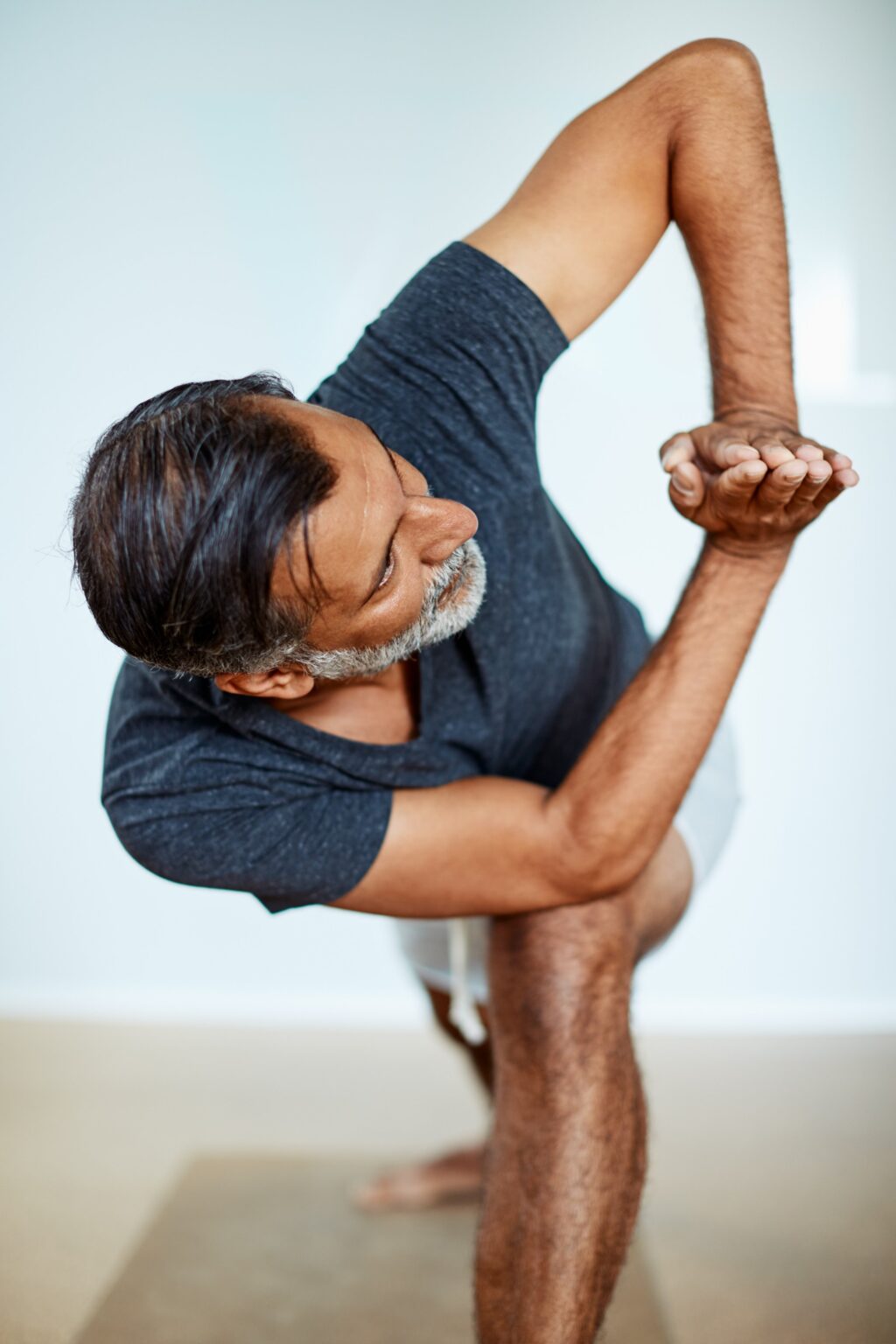
- Strength at end range. Dancers are often very flexible, but flexibility without strength can feel unstable. In a flow you hold poses actively, for example lifting a leg high in a standing balance. That trains control where you’re most mobile.
- Hips and chest. Long lunges, twists and gentle backbends create space in places that often get tight from climbing and long days.
- Breathing under load. In a flow you learn to breathe calmly while you work. You can take that up the wall or onto the stage.
Which parts of a vinyasa class give the most?
You don’t need to know the names, but it helps to know where the work happens:
- Plank and chaturanga: core and shoulder stability. Lower slowly. If your arms are tired, put your knees down.
- Downward dog: shoulders overhead and the backs of your legs. For many climbers it’s a good way to open the shoulders after a session.
- Standing balances: feet, ankles and control. For dancers, this is where flexibility turns into strength.
- Arm balances and handstands (yum on fire): strength and balance on your hands. Fun, but hard on wrists and fingers. Skip them on heavy climbing days.
- Slow transitions: Moving from one pose to the next with control is often harder than the pose itself. This is where many dancers and climbers feel what the flow can do.
What about fingers, wrists and injuries?
Vinyasa puts a lot of weight on your hands. After a hard climbing day you can come down onto your forearms instead of your hands, shorten the arm-supported poses or rest in child’s pose. Tell the teacher before class and you’ll get an alternative.
If you’re very flexible, don’t go all the way to the end of your range in every pose. Stay a little inside your limit and hold the pose actively. If you have an injury, talk to a physiotherapist or doctor before you start.
How to fit vinyasa into your training week
There’s no fixed recipe, but a few principles help:
- Put the powerful flow on a day without hard training. yum on fire is hard on shoulders and wrists. It shouldn’t be the day before your big project or your performance.
- Use the slow flow as active recovery. yum in the sky moves your whole body without draining the tank.
- Add a calm class when your body is sore. yum on earth is slow, inspired by yin and restorative.
- Come regularly. One or two classes a week, week after week, gives more than lots of classes in one week.
Find times that fit your training on schedule and booking.
How we do it at yum
- yum on fire (60–75 min): our most physical class, inspired by vinyasa, hatha, ashtanga and jivamukti, with head- and handstands.
- yum in the sky (60–75 min): a slow flow with movement from hatha and vinyasa.
- yum on earth (60–75 min): slow, inspired by yin and restorative, for rest days.
- Aerial yoga: want even more core and hanging upside down? Start with aerial basics. Read what is aerial yoga?.
- Small classes: a maximum of 18 per class, in English, by the canal in Sydhavn.
New to yoga? Start with yum basic elements. Read yoga for climbers, yoga for dancers and what is vinyasa yoga? too. See every class in class descriptions.
Try it for a month. With yum intro you get 30 days of unlimited yoga, aerial included, for 399 kr. (359 kr. under 30) and 10% off in the café. After that it continues as a membership at 799 kr./month (729 kr. under 30) unless you cancel before the intro ends.
FAQ
Is vinyasa good for climbers?
For many it’s a good complement. The flow trains shoulders and core in a pushing direction and creates space in the hips and chest. It doesn’t replace climbing training, but it can complement it.
Is vinyasa good for dancers?
Yes, especially because it trains strength and control in the positions you’re already flexible in. Hold poses actively, and don’t go all the way to end range every time.
Which yum class should I choose as a climber or dancer?
yum on fire for strength and a challenge. yum in the sky as a slow flow. yum on earth for recovery. If you’re new to yoga, start with yum basic elements.
What should I do about sore fingers and wrists?
Shorten the arm-supported poses, come down onto your forearms, or rest in child’s pose. Tell the teacher before class. If you have an injury, talk to a physiotherapist or doctor.
When in the week should I do vinyasa?
Put the powerful flow on a day without hard training, and use the calm classes on rest days. What matters most is coming regularly.
You should also read these related articles
Classes
Get started with a full month of unlimited yoga
New to yum? Lovely. This is the easiest way to begin.
Try unlimited yoga, get 10% off in the café, and find the classes that fit your real life.
Age 30+
Your first full month at yum
399,-
- 🌊Try unlimited yoga and find the classes that fit your real life.
- 👀Book the classes that help you find your rhythm.
- ☕10% off in the yum café while your membership is active.
The offer is only available to people who have not been a member of yum within the past six calendar months.
The introductory price is valid for 30 days from the date of purchase. After this period, it automatically converts into a yum membership at DKK 729 per month for people under 30 and DKK 799 per month, including VAT, for people aged 30 and over. Your membership gives you unlimited access to yoga classes. You can cancel at any time. By purchasing the offer, you confirm that you have read our terms and conditions.
Under age 30
Your first full month at yum
359,-
- 🌊Try unlimited yoga and find the classes that fit your real life.
- 👀Book the classes that help you find your rhythm.
- ☕10% off in the yum café while your membership is active.